Parisian influence arrives in Victorian Toronto
Introduced to North America from France during the reign of Louis-Napoleon’s Second Empire (after 1851), the Second Empire style quickly became one of the most fashionable architectural expressions of prosperity and modernity in late-19th-century cities. In Toronto — and notably in Cabbagetown — the style flourished from the 1860s through the 1880s, where it was embraced by both affluent homeowners and skilled working families alike.
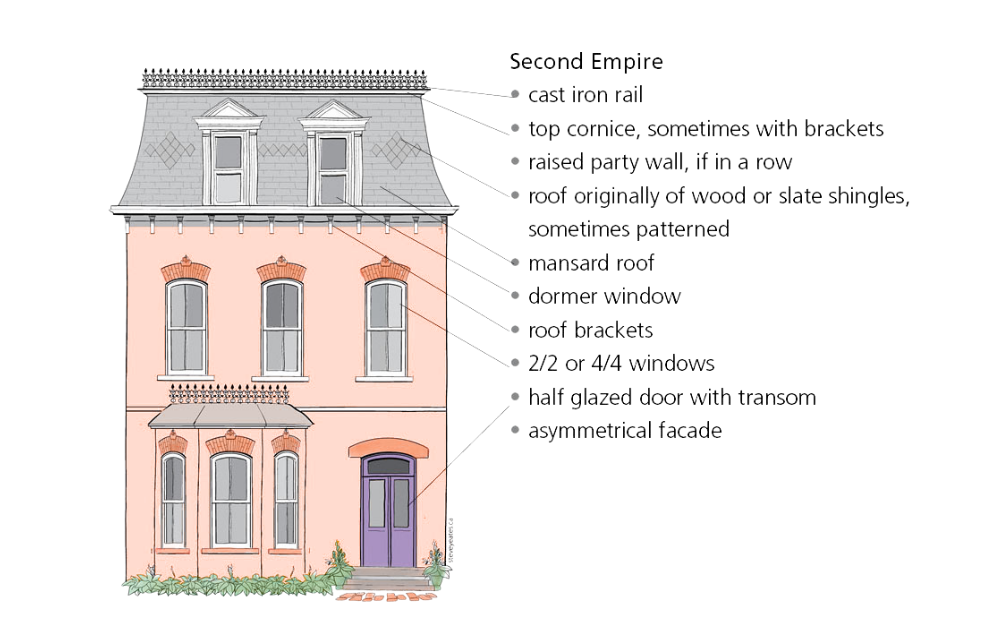
Distinguished above all by its iconic mansard roof, the Second Empire style brought a distinctly European elegance to Toronto’s streets. The steep, multi-sided roof — often punctuated by decorative dormer windows — allowed for a full additional storey within the roofline while creating a dramatic and highly ornamental silhouette. Slate shingles, decorative iron cresting, elaborate wood brackets, and moulded cornices further enhanced the sense of refinement and architectural ambition.
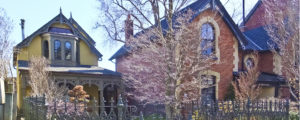
In Cabbagetown, Second Empire houses range from grand, opulent residences to more modest row houses, demonstrating the adaptability of the style across social and economic lines. Larger homes often feature richly detailed brickwork, projecting bays, ornate entryways, and elaborate rooflines, while more modest examples maintain the essential mansard form and characteristic window proportions in simplified form.
Original windows were frequently double casement, allowing for generous light and ventilation, while two- and four-light sash windows are also commonly found. Entry doors were often framed by decorative transoms and sidelights, reinforcing the vertical elegance that defines the style. Even in more restrained examples, the mansard roof remains a defining and unifying feature.
Notable opulent examples can be found at:
-
288 and 314 Carlton Street
-
377 Sackville Street
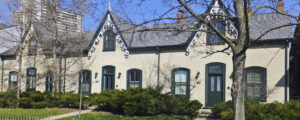
More modest but equally characteristic row house examples appear on:
-
Alpha Avenue
-
438–444 Wellesley Street East
Today, Second Empire houses remain among the most visually striking in Cabbagetown. Their distinctive rooflines and European origins contribute significantly to the neighbourhood’s architectural richness, serving as enduring reminders of a period when Toronto looked to Paris for inspiration and embraced a confident, cosmopolitan architectural identity.