Texture, exuberance, and Victorian imagination
Among the most elaborate and expressive of all Victorian architectural styles, Queen Anne is also one of the most varied and visually dynamic. Flourishing in the 1880s and 1890s during a period of economic optimism and urban expansion, the style became popular across North America for grand private residences — from the richly ornamented “painted ladies” of San Francisco to the dignified brownstones of Brooklyn. In Toronto, it found strong expression in neighbourhoods such as The Annex and Rosedale, and it remains an important part of Cabbagetown’s architectural landscape.
Despite its name, Queen Anne architecture does not directly replicate designs from the reign of Queen Anne. Instead, it represents a late-Victorian reinterpretation of earlier English influences, blended with a bold embrace of asymmetry, texture, and decorative complexity. Where Georgian architecture values restraint and symmetry, Queen Anne celebrates variety and movement.
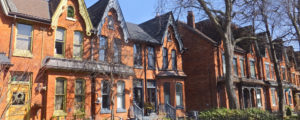
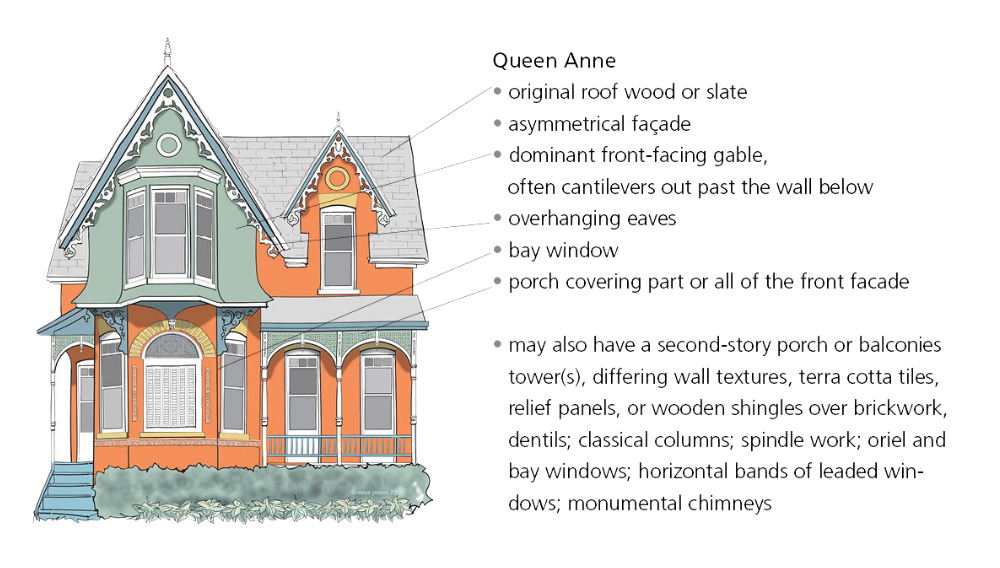
Typical features include irregular rooflines, prominent front-facing gables, projecting bays, decorative brick patterns, stained glass, wraparound porches, and richly ornamented wood trim. Surfaces often combine materials — brick, wood shingles, stone accents — to create depth and visual interest. Turrets or rounded bays may punctuate corners, and elaborate detailing in bargeboard, brackets, and patterned masonry adds further intricacy.
What distinguishes Queen Anne from other Victorian styles in Cabbagetown is its layered composition. No two houses are quite alike. The style allowed architects and builders to experiment, resulting in façades that feel animated and sculptural. Even within tight urban lots, Queen Anne homes introduce rhythm and drama to the streetscape.
In Cabbagetown, outstanding and contrasting examples include:
-
297 Carlton Street
-
314 Wellesley Street
-
384 Sumach Street, affectionately known as The Witch’s House, a particularly evocative and well-known example of the style
Together, these homes demonstrate the creativity and craftsmanship that defined late-Victorian design. Queen Anne architecture contributes vibrancy and richness to Cabbagetown’s historic fabric, embodying a period when architectural expression was bold, confident, and joyfully ornamental.