The defining silhouette of Victorian Toronto
Perhaps the most recognizable and prevalent architectural form in Cabbagetown, the Bay-and-Gable house became the signature residential style of late-19th-century Toronto. Built primarily during the economic and population boom of the 1880s, these homes reflect a period of optimism, prosperity, and rapid urban growth.
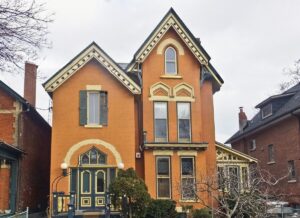
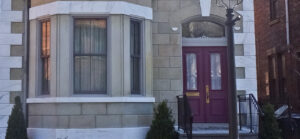
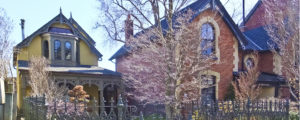
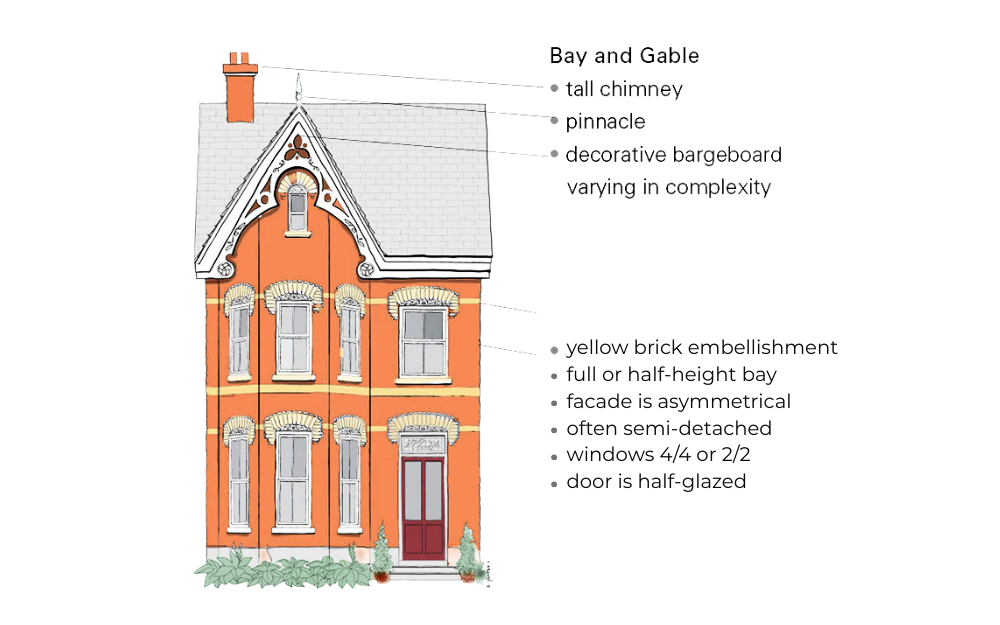
Characterized by their distinctive projecting bay window and steeply pitched front gable, Bay-and-Gables were designed to maximize both light and interior space on narrow urban lots. The vertical emphasis of the front façade — often enhanced with decorative brickwork, intricate wood trim, and patterned shingles — creates a rhythmic streetscape that is at once elegant and cohesive.
While the form was practical and adaptable, it was far from modest. Many examples feature finely detailed bargeboard, stained glass transoms, carved wood brackets, and ornamental brick patterns that demonstrate the craftsmanship of Toronto’s Victorian builders. Subtle variations in detailing allow each house to maintain individuality, even as rows of Bay-and-Gables collectively define entire streets.
Though variations of this house type appear in other parts of Toronto, nowhere is the concentration as complete and visually intact as in Cabbagetown. Practically every street in the district includes elegant examples, making the Bay-and-Gable an essential component of the neighbourhood’s architectural identity.
Notable examples can be found along:
-
6 to 32 Metcalfe Street
-
5 and 7 Parkview Avenue
Today, these homes remain among the most cherished in Cabbagetown — their strong vertical lines and prominent gables forming one of the most iconic silhouettes in the city’s historic residential landscape.